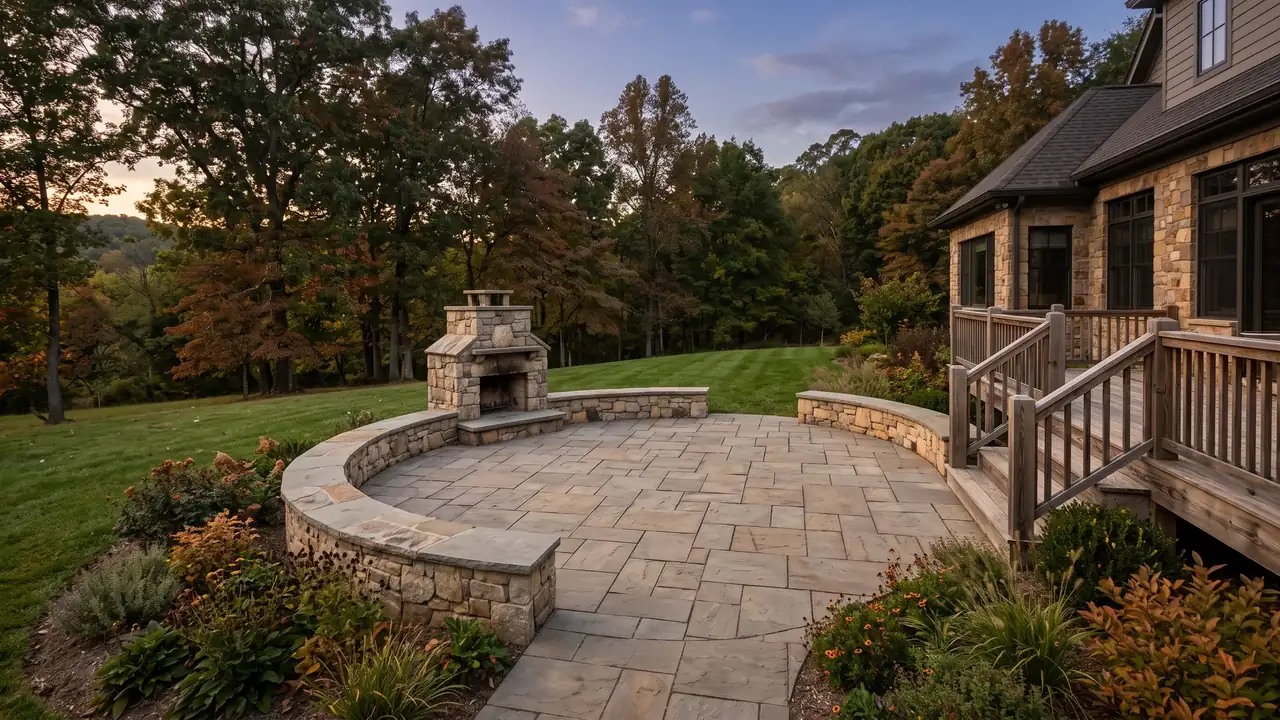
Fire pit installation in Roanoke, VA covers wood-burning pits, propane fire pits and manufactured units. Placement has to respect the City's recreational-fire rules, clearances to structures and how the pit sits on or beside a patio. This page helps you compare options and prepare a request; a named local installer is introduced only with your consent.
Planning a chimneyed hearth instead? See outdoor fireplace installation in Roanoke.
A fire pit or outdoor fireplace in Roanoke, Virginia often becomes the reason people use a patio after dark and into the cooler months. This page is for City homeowners deciding between a built fire pit, a masonry fireplace, a manufactured fire bowl or a simple outdoor cooking area. It explains what each option involves, how the City's published fire rules shape placement on a typical lot, what drives the scope, and how to describe the idea so a provider can be introduced, with your approval, to a clear request.
What does fire pit installation in Roanoke involve?
A built fire pit is a ring or square of masonry around a fire area, set on a compacted base. It needs a fire-rated liner or firebrick on the inside, because ordinary landscape block and some natural stones can crack or spall when they heat up, especially if they hold moisture. It also needs drainage at the bottom so rain does not sit in the bowl.
An outdoor fireplace is a much larger structure. It has a firebox, a hearth, a chimney and a substantial weight, so it sits on a reinforced footing rather than on a patio base. The City's Local Climatic Design Criteria list an 18-inch frost line depth for the City, a figure that matters for any footing carrying that much masonry.
Both options have to work with the surface around them. Seating distance, the path people walk past the fire, and where smoke drifts all affect the size and shape of the patio. The patios and outdoor rooms page covers sizing and base work for that surface.
When is a fire feature the right addition?
A fire feature makes sense when a household already uses its yard in the evening and wants a focal point, when a patio feels empty without a gathering spot, or when the goal is to stretch outdoor use into spring and fall.
It is usually worth planning early, even if it will be built later. A fire pit dropped onto a finished patio may end up too close to the house or too tight for chairs. A fireplace added later may need a footing that means cutting into new paving. The guide to planning a connected outdoor space shows how to reserve a location during the first phase.
How do the City's fire rules affect placement?
Placement in the City is shaped first by the fire code, not the patio. The City's published open burning and outdoor fireplace page (checked October 9, 2026) says there is no open burning in the City, but recreational fires and portable outdoor fireplaces are allowed when they meet set conditions.
A recreational fire is defined as a fire under 3 feet in diameter and 2 feet high, and the City names a man-made fire pit as an example. It must be at least 25 feet from a structure or combustible material, with dry grass, leaves and similar fuel cleared within that distance. On many in-town lots, a 25-foot circle that clears the house, a garage, a wooden fence and a deck is hard to find.
Portable outdoor fireplaces, such as manufactured burn pits, burn pans and chimineas, are treated differently. They must be used according to the manufacturer's instructions with a screen or mesh cover in place. At one- and two-family homes, the City sets no minimum separation as long as there is no evidence of a fire hazard.
Every type must be constantly attended, have an extinguisher, hose or bucket ready, burn only clean, dry, seasoned firewood and avoid creating a smoke nuisance. The guide to fire pit rules and placement compares the two categories in detail.
What about gas fire features and outdoor kitchens?
The City's fire page focuses on wood fires and does not set separate rules for gas fire tables or gas fireplaces, so ask the Fire Marshal's Office how a specific gas unit would be treated. Running a gas line, adding a circuit for lighting or a refrigerator, or plumbing a sink are separate matters: the building code the City enforces requires a permit before work on fuel supply systems, electric wiring or water and drainage systems, and gas lines on private property go through the City's site utilities process.
A simple outdoor cooking area is often the next step after a fire feature. A practical layout keeps the grill or cooking counter near the house door for carrying food, keeps it out of the main walking path, and leaves counter space on both sides. The City lists cooking fires in an approved device as an exception to its open burning ban, provided no smoke nuisance results. Counters need a solid base just as a patio does, and any utilities should be planned before the surface goes down so nothing has to be cut later.
What affects the cost of a fire feature?
The main factors are:
- Type and size. A ring fire pit, a raised pit with seating ledge and a full fireplace with chimney are very different amounts of masonry.
- Foundation. A fireplace needs an engineered or code-compliant footing; a pit usually needs only a compacted base.
- Materials. Fire-rated liners, firebrick, cap stone and veneer choices.
- Fuel. Wood-burning versus gas, and the distance a gas line must run.
- Integration. Building into an existing patio means cutting and patching; building at the same time as a new patio is usually simpler.
- Access. Masonry and stone are heavy, and tight back yards slow delivery.
- Approvals. Trade permits for gas or electric, and historic-district review where it applies.
Built fire pit, fireplace, or manufactured unit: which fits?
A built wood-burning pit gives a permanent gathering spot but has to meet the 25-foot recreational fire distance. A manufactured burn pit or fire bowl used with its screen avoids that fixed distance at one- and two-family homes and can move as needs change. A masonry fireplace directs smoke upward and blocks wind, but it is the largest and most permanent choice. A gas unit avoids embers and wood storage but needs a gas line and the related permit.
For an older fire pit that has cracked, replacing the liner and cap can be enough if the base is sound. A pit that has sunk or tilted, or a fireplace with a leaning chimney, should be looked at before it is used again.
How do you prepare a fire feature request?
Send wide photos of the intended spot showing the house, fences, decks, trees and overhanging branches nearby. Pace off the distance from the spot to the house and to any wooden structure. Note whether you want wood, gas or a portable unit, how many people should fit around it, and whether a cooking area is part of the plan. Mention any gas service already at the house. Utility lines must be marked through Virginia 811 before digging. To compare other project types, see all hardscape services or go back to the home page.
Requests are welcome from homeowners throughout the City of Roanoke: Raleigh Court and Grandin Village, South Roanoke, Old Southwest, Wasena, Villa Heights and Gainsboro, Fallon Park, and the Williamson Road corridor. If a local provider is a fit for the job, you learn that provider's name and choose whether to be introduced.
Local rules and sources on this page were checked on October 9, 2026. Requirements change; confirm with the responsible office before work begins.
Decide the next part of your project
Use these guides to compare the work, prepare better questions and connect the service plan to the actual property.